Published on:
March 24, 2021

By Iain McDonell, Yorkshire Agriculture Senior Executive Officer, Environment Agency
What does it do?
Aeration allows air to get to the grass roots and soil, helps root development, helps alleviate compaction, improves drainage and helps reduce slurry and fertiliser runoff. It improves microbial activity and helps nutrient and crop debris breakdown.
What it achieves/benefits?
Aerated soil tend to be warmer than none aerated soils so making better use of fertilisers. Aeration can boost grass production as nutrients can be absorbed into the soil preventing running off. Heavily compacted soils can see an increase in fertiliser run off by at least 50%.
When would you do it?
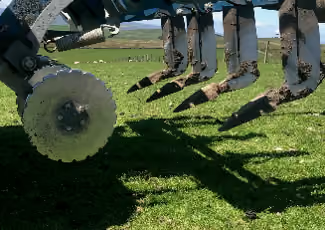
Timing of aeration is critical. Use a spade and where the spade first meets resistance that’s compaction. Then look for changes in soil structure. The ground needs to be dry enough to avoid tractor compaction whilst having enough moisture to allow the aerator spikes to penetrate. Spring and autumn are the ideal time, ideally pre slurry or fertiliser spreading. Machine types that help take out soil compaction are;
When should you not do it?
Do not aerate in overly wet or dry ground conditions. Saturated soils will ‘smear’ the sides of the slit reducing the amount of air entering into the silt. In very dry conditions the soil can open up and crack and may cause excessive drying.
Best way to use a soil aerator:

Best way to use a sward lifter/subsoiler:
Share on:



Sign up to our mailing list for the latest news, updates, opportunities and more.

Our sustainable approach
At Calder Rivers Trust, we believe that sustainable design isn’t just a choice, it is an obligation. The health of our natural world is at the heart of everything we do, and that includes our digital footprint. Our approach to building our website reflects our commitment to a world where both our rivers and our climate can thrive.
By using compressed images, simplified code, and optimised content, we ensure our online presence aligns with our mission to protect nature. Through these practices, we have kept our environmental impact to a minimum.
Impact: Our homepage produces just 0.12g of CO₂ per page load.
Performance: This makes our site cleaner than 71% of all web pages tested globally.
Measurement: We track our footprint using Website Carbon, which calculates footprints based on data transfer, energy use, and the carbon intensity of the electricity used.