
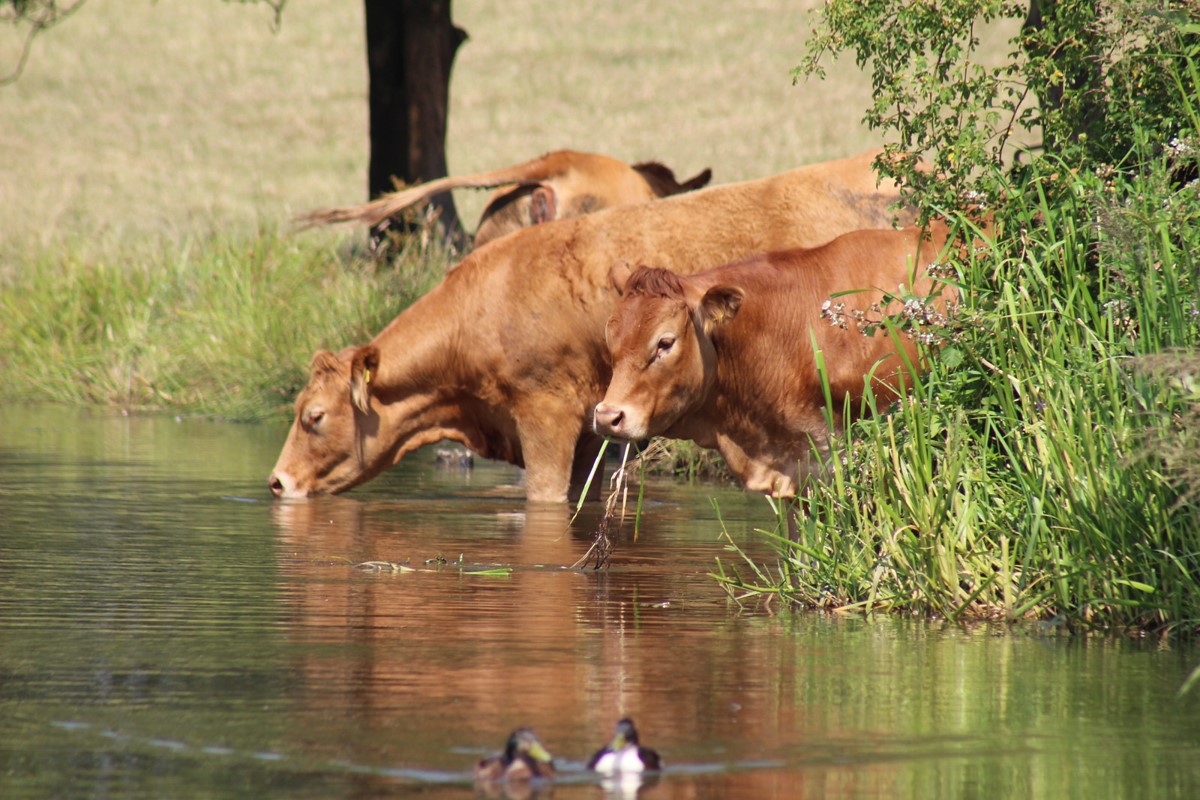

We are now launching the new Calder Rivers Trust Farm Advice Service. We believe that healthy soils underpin a prosperous and resilient catchment, and that by supporting farmers and land managers to improve their soil health, water quality, carbon capture, and biodiversity, we can support both the environment and local farm businesses.
Our Farm Advice is free, confidential and farmer-led. That means that we will not charge for a farm visit, and we will not share the report about your farm, or any information from it, with anyone but you. It also means that reports will be based on what you want to do with your land. Our aim is to provide a good summary of the options which may be available to you, so that you can make an informed decision about making changes to your farm, land, or business. There is no obligation to make any changes as a result of your survey, or to use a particular funder to support any changes you do make.
We offer a full farm survey, or we can look at a specific area if you have a particular project or opportunity in mind. We base our surveys on the Rivers Trust Pinpoint system, which focuses on working with farmers and land managers to reduce diffuse pollution from agriculture, but often measures which reduce diffuse pollution have additional benefits for environment and businesses, such as creating habitat or reducing water costs.
We also want to be led by farmers and land managers in developing the Farm Advice Service. If you have an idea for something to add in to the service which might be useful to you, please let us know. Any feedback, suggestions or questions can be addressed to our Farm Advice Team. Email: farmadvice@calderandcolneriverstrust.org or phone 07415 736308
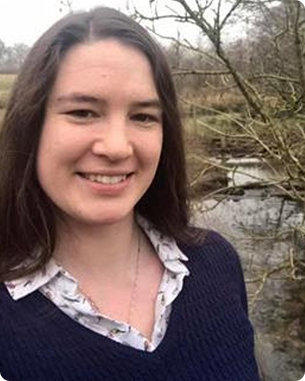
Jane is a famer’s daughter from near Otley, in Wharfedale. Having completed her PhD in the history of the twentieth-century farming community in Wharfedale at the University of Leicester in 2017, she worked as administrator to both water@leeds and iCASP at the University of Leeds. As Postdoctoral Research Associate at Hull from 2018 to January 2021, working on the ‘Past Flooding Matters’ project, she examined the histories of water level management from 1750 to the present day, based on archival sources and interviews with farmers, water industry practitioners and other stakeholders.
As Farm and Rural Liaison Officer, Jane is available to help farmers and rural communities to access funding, primarily for actions which will improve carbon capture and water quality. She is also interested works to improve biodiversity, natural flood management and increased farm productivity while working towards carbon negative agriculture. Please contact Jane, using the details below, for free and confidential advice or to discuss your ideas for enhancing rural space in Calderdale and Kirklees.
BASIS Soil and Water Management Certificate: SW/1378
Email: jane.rowling@calderandcolneriverstrust.org
Phone: 07943 470 261
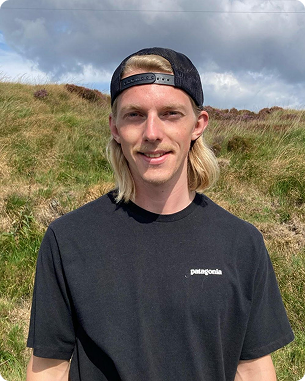
Over the past 7+ years, Ollie has been working intensively in the agricultural and equine industry. This has given him a great way of seeing where problems can occur, why they occur, and how to fix them.
Ollie says:
“I have had experience in almost every sector of farming whether it be sheep, dairy or arable and have always taken it upon myself to learn about current trends and themes within the industry but to also look and how things were done traditionally, this gives me a good understanding of how things have changed and what the ‘pros’ and ‘cons’ are of different practices.
I believe that my past experiences will help me to relate to farmers and landowners and help gain their trust, as this will be vital for a long and prosperous relationship.
I am very excited to be working at the Trust and I hope to make some very valuable contributions to not only the environment but to the Trust as a whole.
In my free time I love to get outdoors as much as possible whether it be surfing or other water sports to rock climbing and hiking. As long as it challenges me I’ll give it a go and get dirty doing it!!”
Email: oliver.watt@calderandcolneriverstrust.org
Phone: 07415 736308
Funding opportunities in the Calder catchment.
In the Todmorden area (application window Tuesday 15 June – Monday 2 August 2021)
https://eyeoncalderdale.com/Funding-available-for-landowners
https://defrafarming.blog.gov.uk/2021/06/23/future-farming-whats-changing/
DEFRA’s Sustainable Farming Incentive pilot will begin in October 2021. The deadline for expressions of interest was 11 April 2021, and Defra has invited all farmers who expressed interest to submit a full application to the pilot. A key part of the pilot will be giving feedback to DEFRA on how the scheme works.
https://defrafarming.blog.gov.uk/2021/02/11/video-farming-forum-qa/
https://defrafarming.blog.gov.uk/
https://www.gov.uk/government/publications/agricultural-transition-plan-june-2021-progress-update
Countryside Stewardship Schemes will remain open for applications in 2022, 2023 and 2024. It will be possible for farmers to transfer from their existing Countryside Stewardship agreement to the new Environmental Land Management Agreements without penalty when the Scheme rolls out in 2024.
https://www.gov.uk/government/collections/countryside-stewardship
https://www.gov.uk/government/publications/countryside-stewardship-capital-grant-application-form
https://www.gov.uk/government/collections/countryside-stewardship-facilitation-funding
Carbon capture is an important topic for farmers. Not only will increasing carbon capture on farms attract future funding, but it also has the potential to increase agricultural productivity.
https://farmcarbontoolkit.org.uk/
https://www.fwi.co.uk/news/environment/how-do-three-main-farm-carbon-calculators-compare
https://www.youtube.com/watch?v=iEML_rtNOQ8
https://www.youtube.com/watch?v=mNUW66BIj8o&t=50s
https://www.youtube.com/watch?v=ac-hiKZMoFA&t=4s
https://www.youtube.com/watch?v=Wk8rVcmHJ5M&t=1s
https://www.youtube.com/watch?v=Wk8rVcmHJ5M&t=1s
Diffuse pollution can have major impacts on ecosystems, habitats and communities downstream.
https://www.gov.uk/guidance/rules-for-farmers-and-land-managers-to-prevent-water-pollution
Woodlands offer a land management solution with the potential to store large amounts of carbon, to provide habitats for a range of wildlife and plant life, and to attract future funding for farmers under environmental schemes.
https://www.gov.uk/guidance/woodland-creation-grant-countryside-stewardship
http://www.treesponsibility.com/
https://www.soilassociation.org/causes-campaigns/agroforestry
https://www.gov.uk/guidance/create-woodland-overview
https://www.nationalsheep.org.uk/workspace/pdfs/nsa-sheep-and-trees-for-website.pdf
https://www.gov.uk/guidance/england-woodland-creation-offer
Learning more about your soils can help you to make more informed land management decisions.
Grazing horses can cause damage to grassland, causing poaching of the soils, soil compaction, run-off and loss of biodiversity. By carefully managing equine grazing we can reduce these problems and contribute to a better countryside for everyone.
http://www.sussexflowinitiative.org/blog/natural-flood-management-and-horses
http://www.magnificentmeadows.org.uk/assets/pdfs/Grasslands_HandPO_FINAL_MR.pdf
Share on:



Sign up to our mailing list for the latest news, updates, opportunities and more.

Our sustainable approach
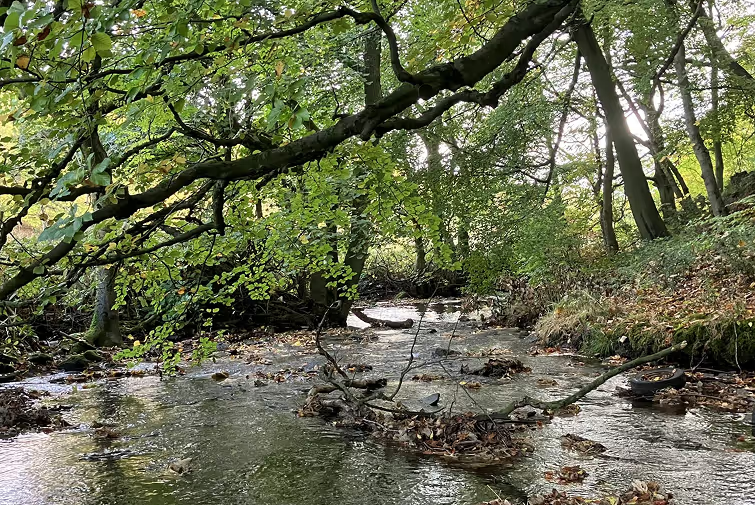
At Calder Rivers Trust, we believe that sustainable design isn’t just a choice, it is an obligation. The health of our natural world is at the heart of everything we do, and that includes our digital footprint. Our approach to building our website reflects our commitment to a world where both our rivers and our climate can thrive.
By using compressed images, simplified code, and optimised content, we ensure our online presence aligns with our mission to protect nature. Through these practices, we have kept our environmental impact to a minimum.
Impact: Our homepage produces just 0.12g of CO₂ per page load.
Performance: This makes our site cleaner than 71% of all web pages tested globally.
Measurement: We track our footprint using Website Carbon, which calculates footprints based on data transfer, energy use, and the carbon intensity of the electricity used.


